The Dance of Life
Liminal Works by Andrea M. Smith
On View 12.11. 2025 - 1.25.2025
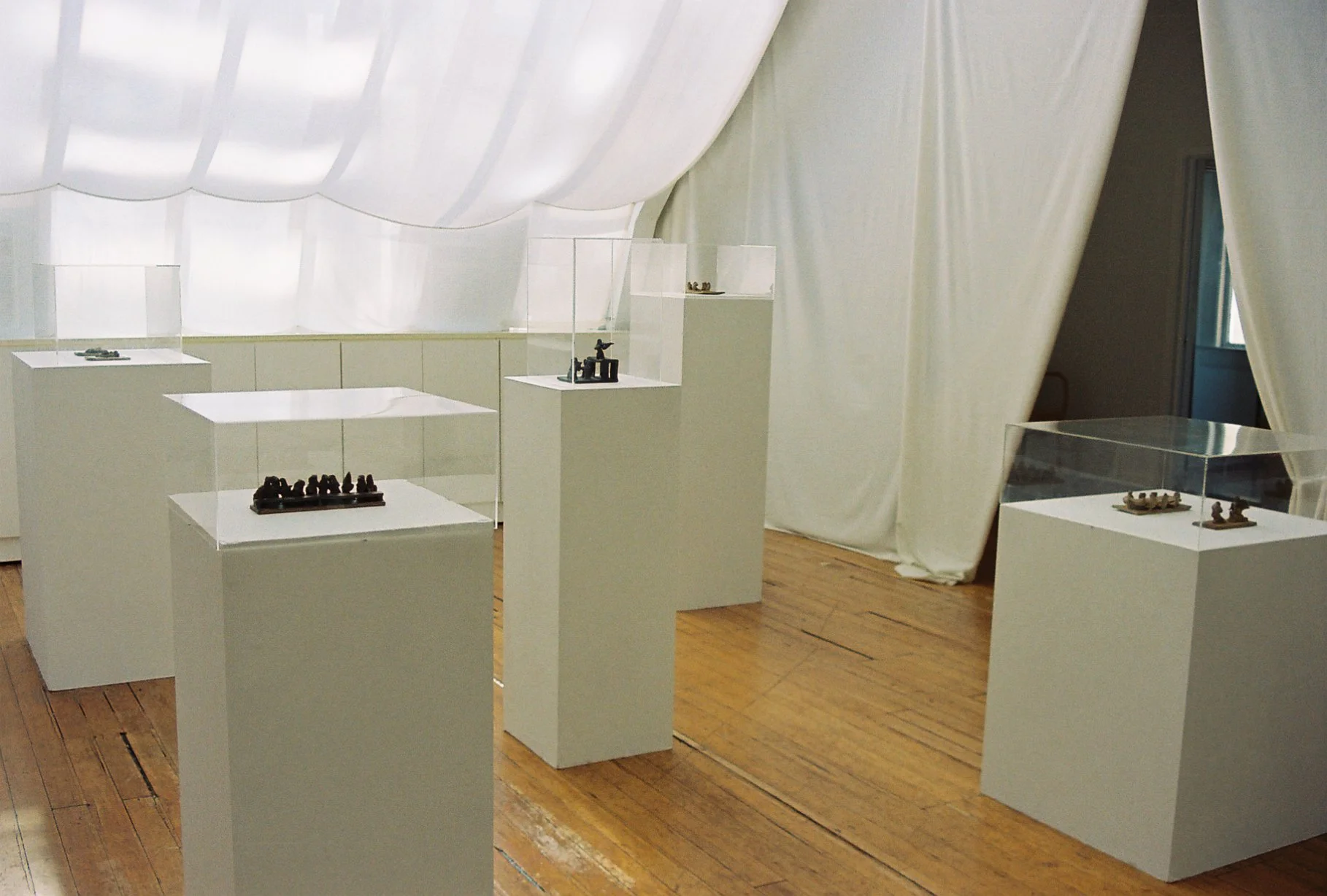
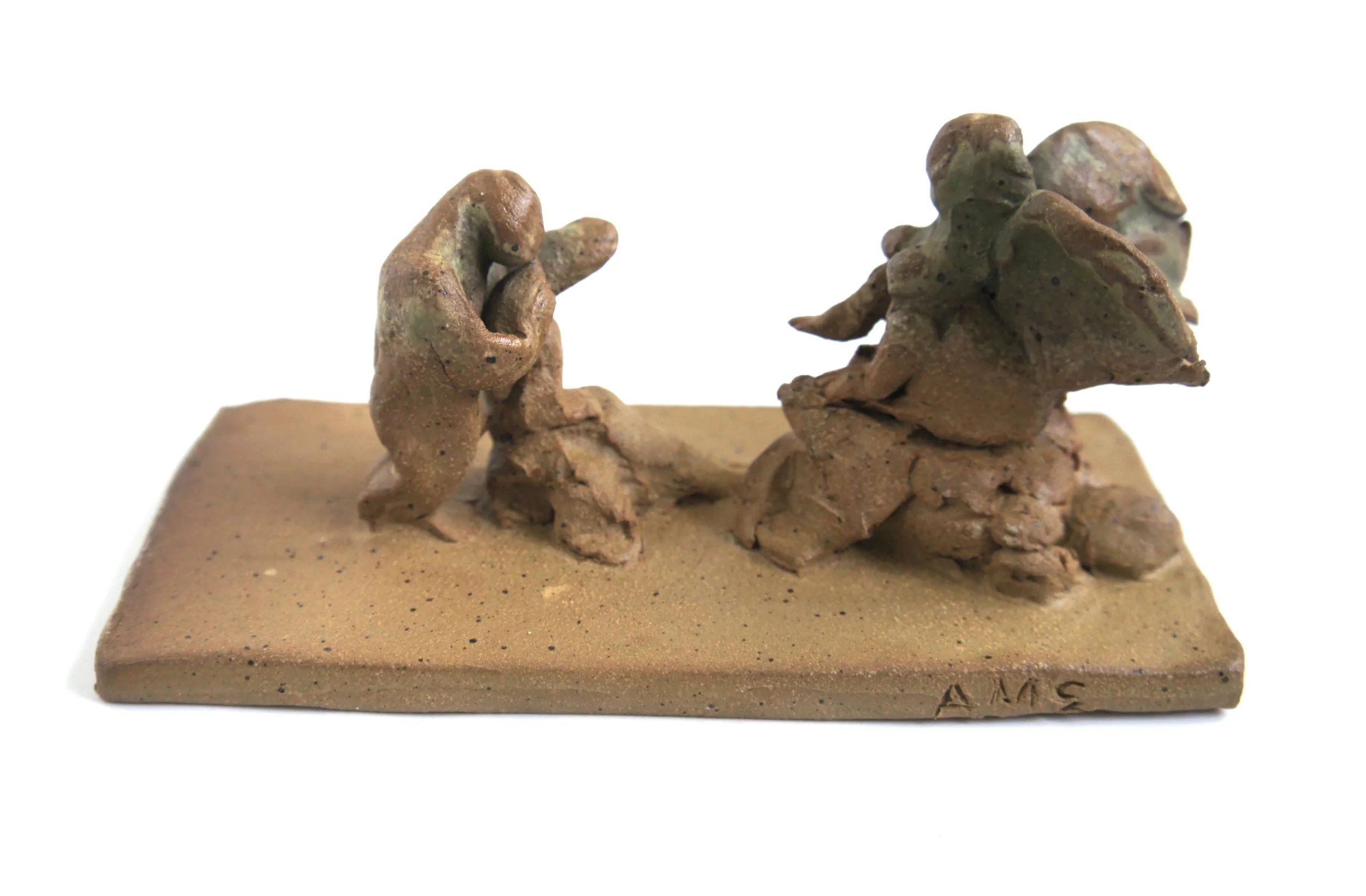
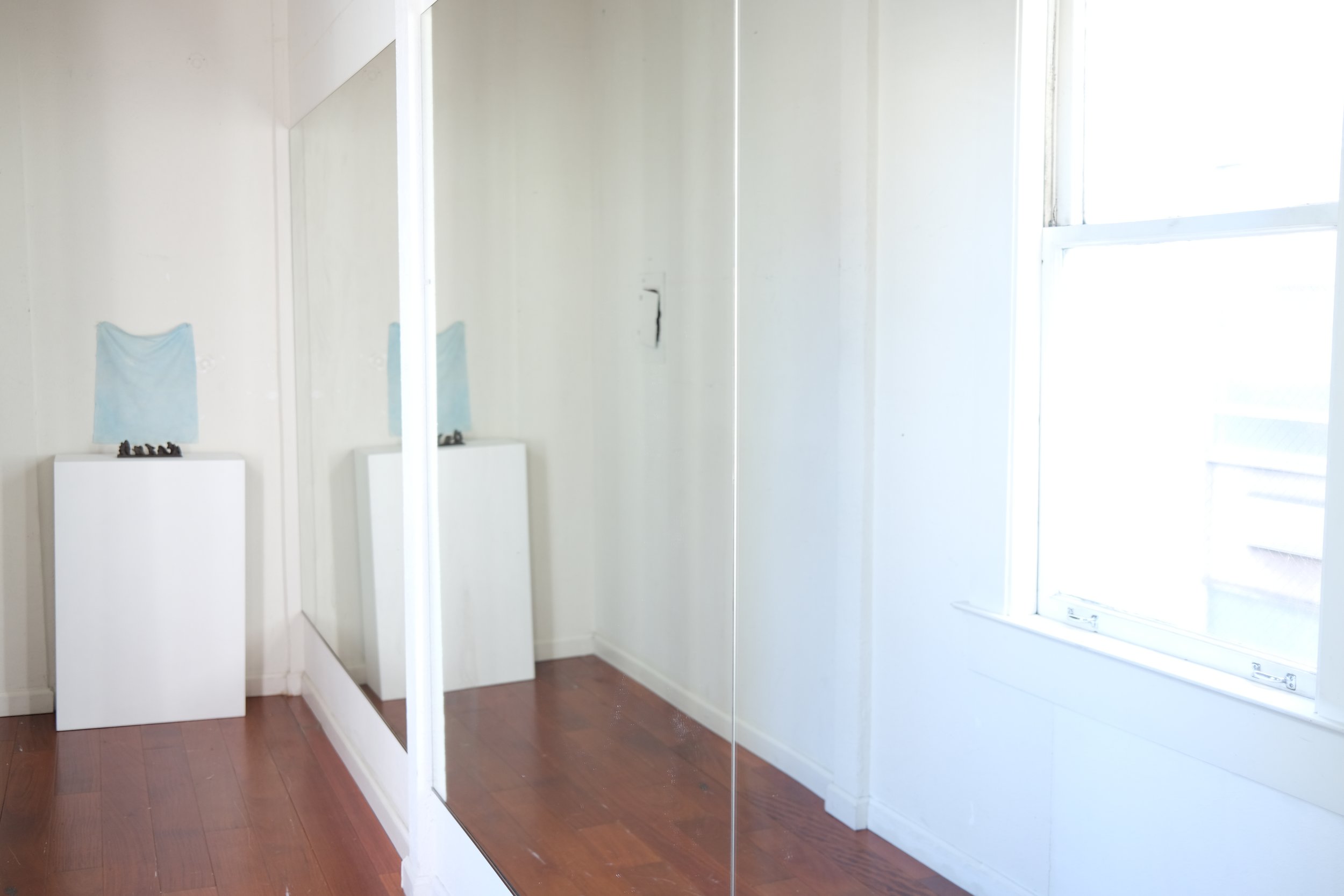
The dance of life enacts a series of dramas. We recognize most of them — in name if not in plot, in meaning if not in knowledge reaped from life. We can imagine. The Last Supper, Jacob Fighting the Angel, Eurydice, Migrants, Taxes. Defining scenes and stories of the Greek tragedians and myths, of the bible, that "suggest figures in a plot at work from day to day," as Robert Duncan says of H.D.'s poetry, which too looked to myth as to flower.
Andrea Smith sculpted these pieces from memory in the clay of her natal Minnesota. Emotionally excavated scenes, archeological in form, universal fables and motifs patterning beneath or stories and experience.
All times are contemporaneous, wrote Ezra Pound in The Spirit of Romance. Gertrude Stein called this sense of time "the continuous present," and, as Duncan elaborates, she saw the great drama of man's engagement in a composition of the contemporary.
Andrea Smith calls the works in The Dance of Life liminal. Liminal in the sense that these dramas in clay and the tape paintings move out of her home medium of painting and then back to inform it. They are also liminal in the time of which they speak: Relics of the past or of the future "troubling the waters towards some needed quality of distribution and equilibration."
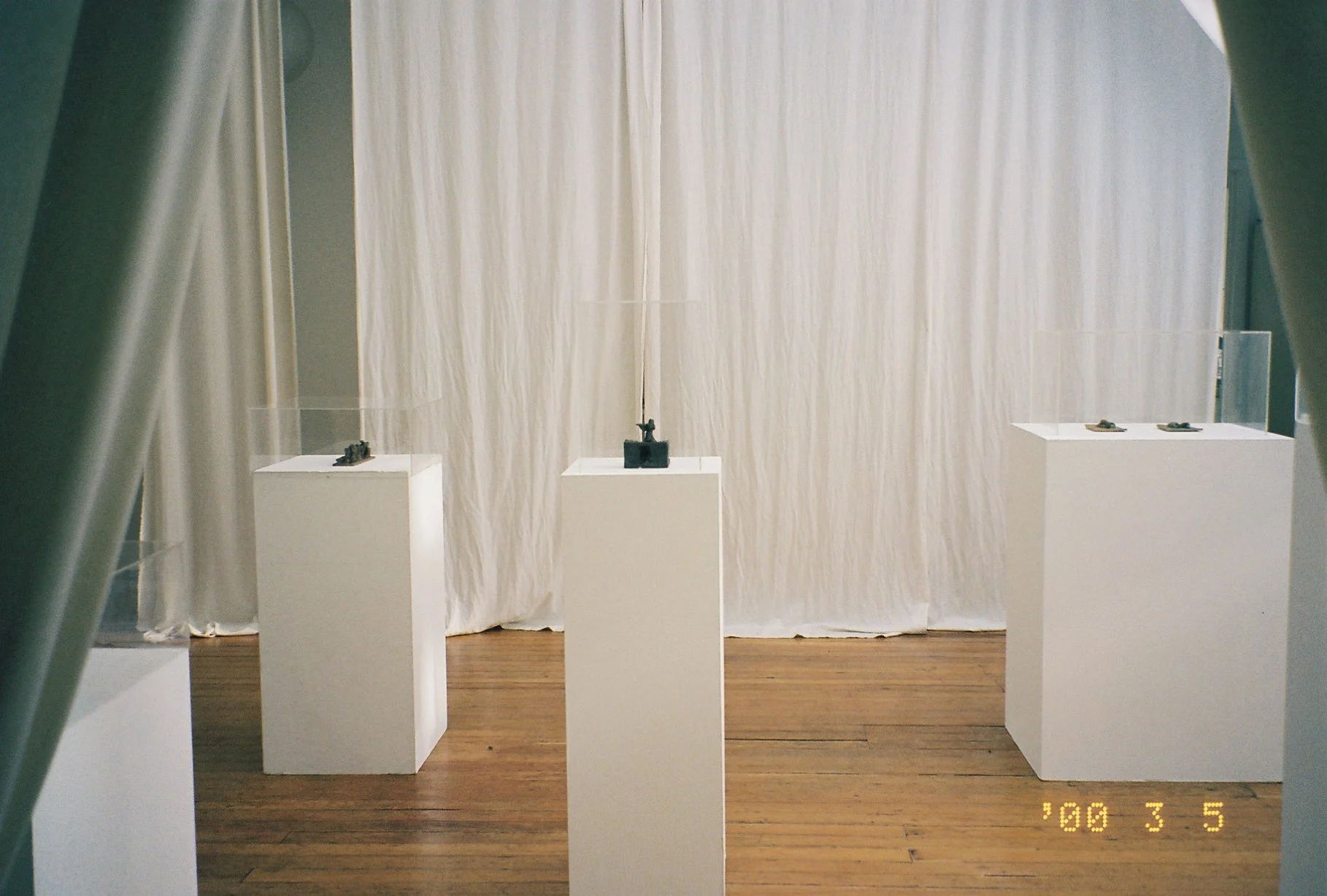
The title piece is a rendering of Edvard Munch's painting The Dance of Life (1899). Two figures in the center, their arms entwined, dance or wrestle—an ambiguity between eris (strife) and eros (love) present in each of the accompanying dramas. The figures to either side, and the woman's arms woven with the man she dances with are said to symbolize the phases of life, which Munch articulated through the female form, and color. In Smith’s hand, there is no variation of color, the bodies are androgenous, only the formed gestures of bodies entirely feeling. The dance of life is a circle dance, round the phases of life, love, death.
Munch's age — was a parallel of anxiety amid industrialization, capitalism, and the onset of the First World War. Changing landscapes, world orders, alienation. So we too exist in an age of transformation: ecological catastrophe, wars and genocides, big tech, extreme disparity, and mass migrations. “Like the turn-of-the-century artists, those today must also re-imagine the future through progressive movements,” recounts Smith. What does it mean to be living, making, excavating at this time?
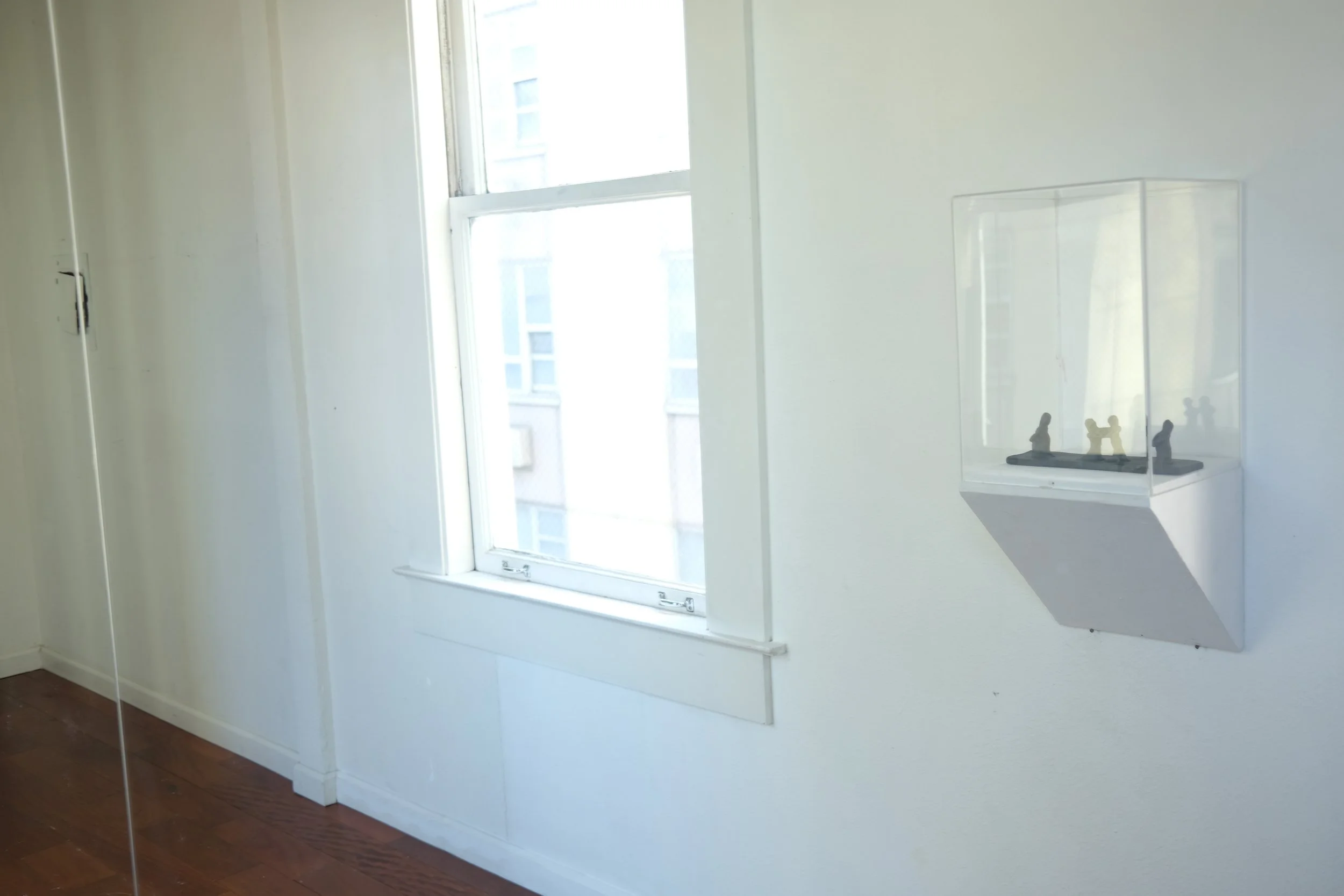
The figures emerge like tree trunks growing from the ground molded and swept into expressions of deep pathos. Bodies denuded, heavy flesh, flesh same as each other same as the ground they dance on, wrestle on, file taxes on. The nearly empty tax table is like a tabernacle, a parallel to that, though teaming, of the Last Supper. Eurydice! She lunges out of the underworld towards Orpheus, Smith's fingerprints trace the breaking ground that separates her from the upper world and its fragrant crocus flowers.
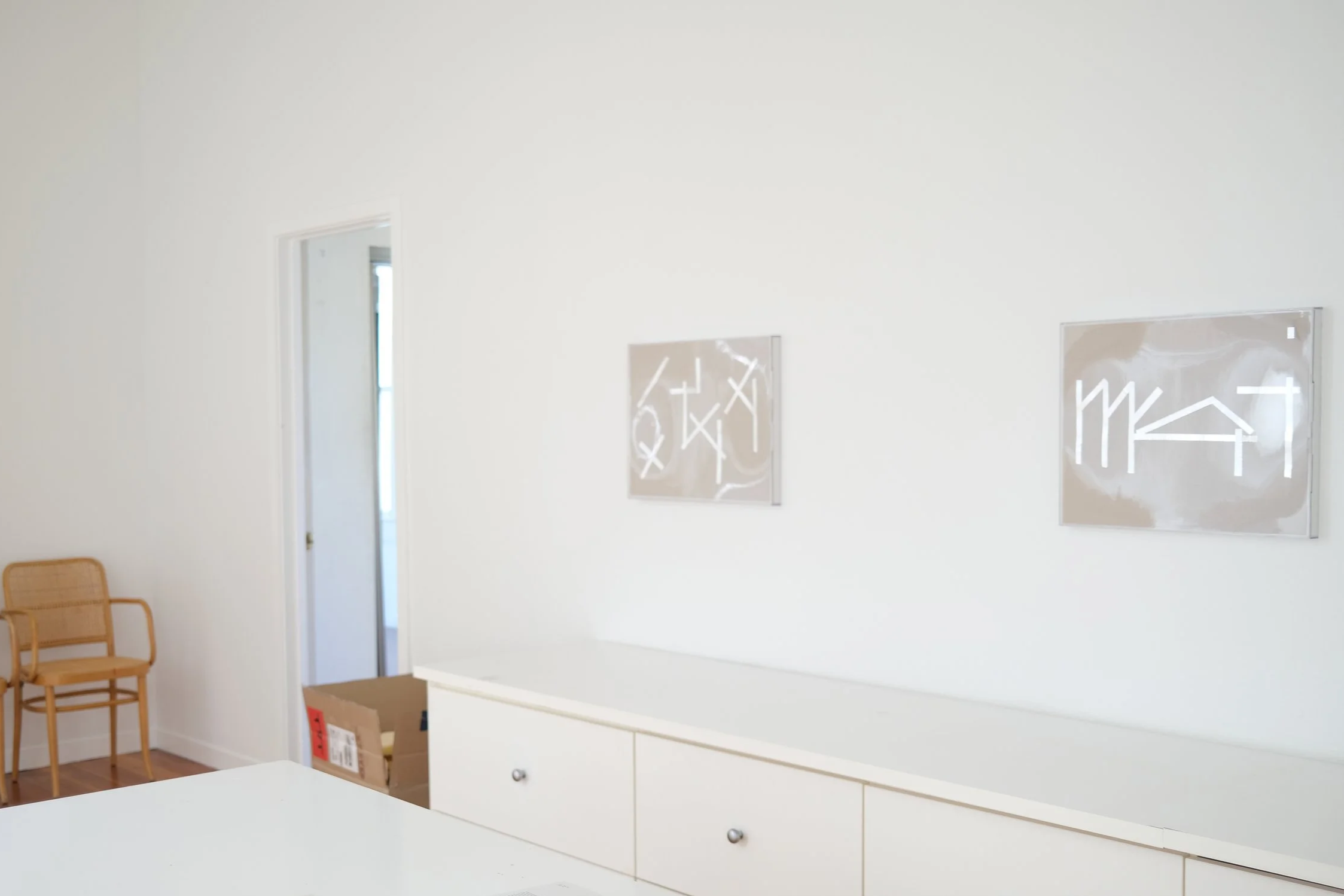
The tape paintings — hieroglyphic images made with electrician's foil on paper — gleam in the light. They are simple marks depicting imagery expropriated from ancient reliefs and pottery. Picking up patterns from the everyday world.
Over the last year, Smith has been recording people's premonitions, anxieties, and hopes for the year 2050. A singular voice seems to emerge, grief and hope and prophesies, like graffiti, fragments on the walls of another trembling world order.
All of the same world. The future and the past, and here where I am now.
PAST

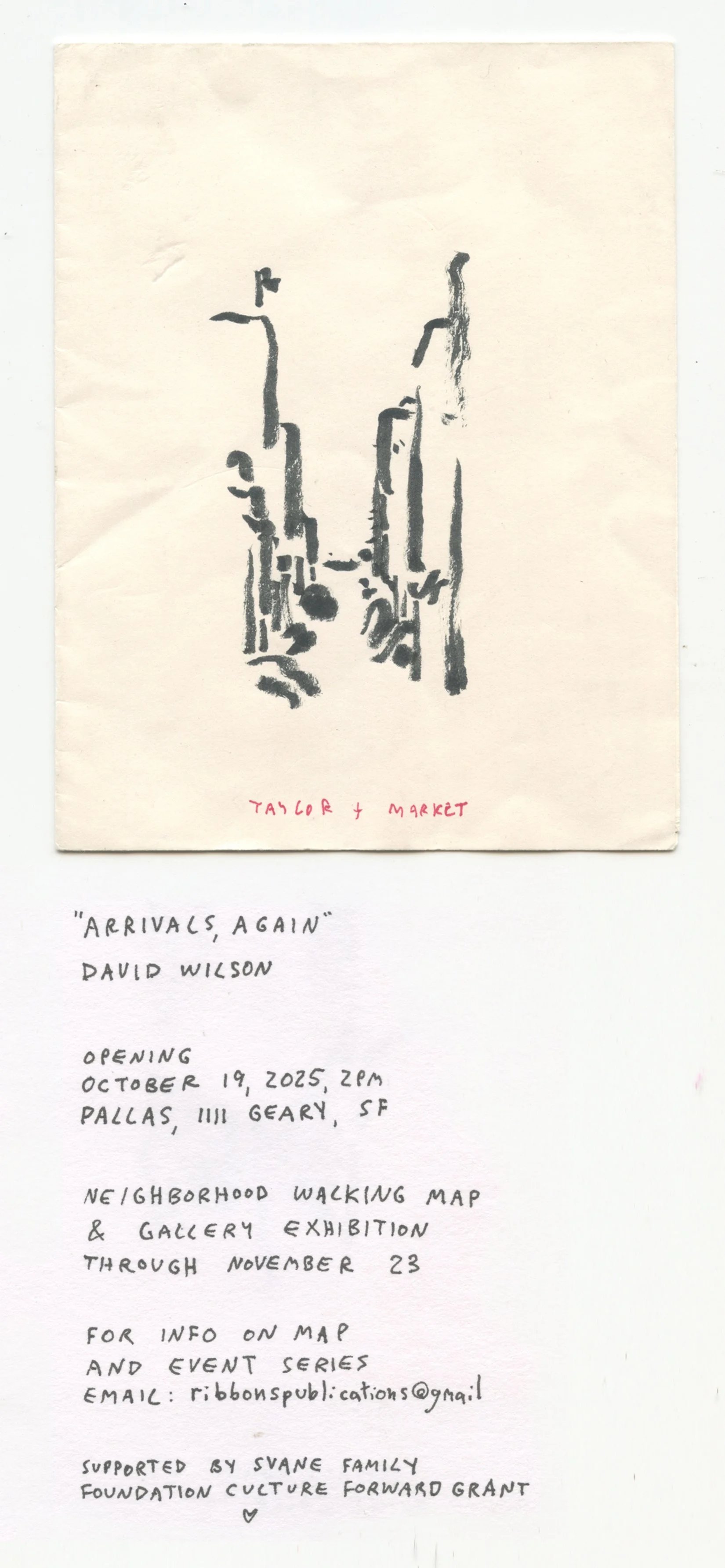
"Arrivals, Again" is an exhibition of new drawings and paintings by David Wilson made over a season of street walks and rooftop observations in Downtown San Francisco. Out of this period of neighborhood attunement, Wilson also created a map to encourage self-guided walking explorations, steering participants towards a constellation of sites where hidden envelopes hold prints of his drawings.
Maps are available at Pallas, as well as the following partners: Dark Entries Records, ICA SF, Rebecca Camacho Presents, William Stout Books, Jessica Silverman Gallery, Glass Rice Gallery, Cup of Joy coffee shop, 509 Leavenworth Shop, Tenderloin Museum, Tenderloin People's Garden, and Hospitality House's Community Arts Program.
Pick up a map from any of these places (during open hours) and go collect the series of prints as an unbound publication scattered across civic space — and gather together for these events.
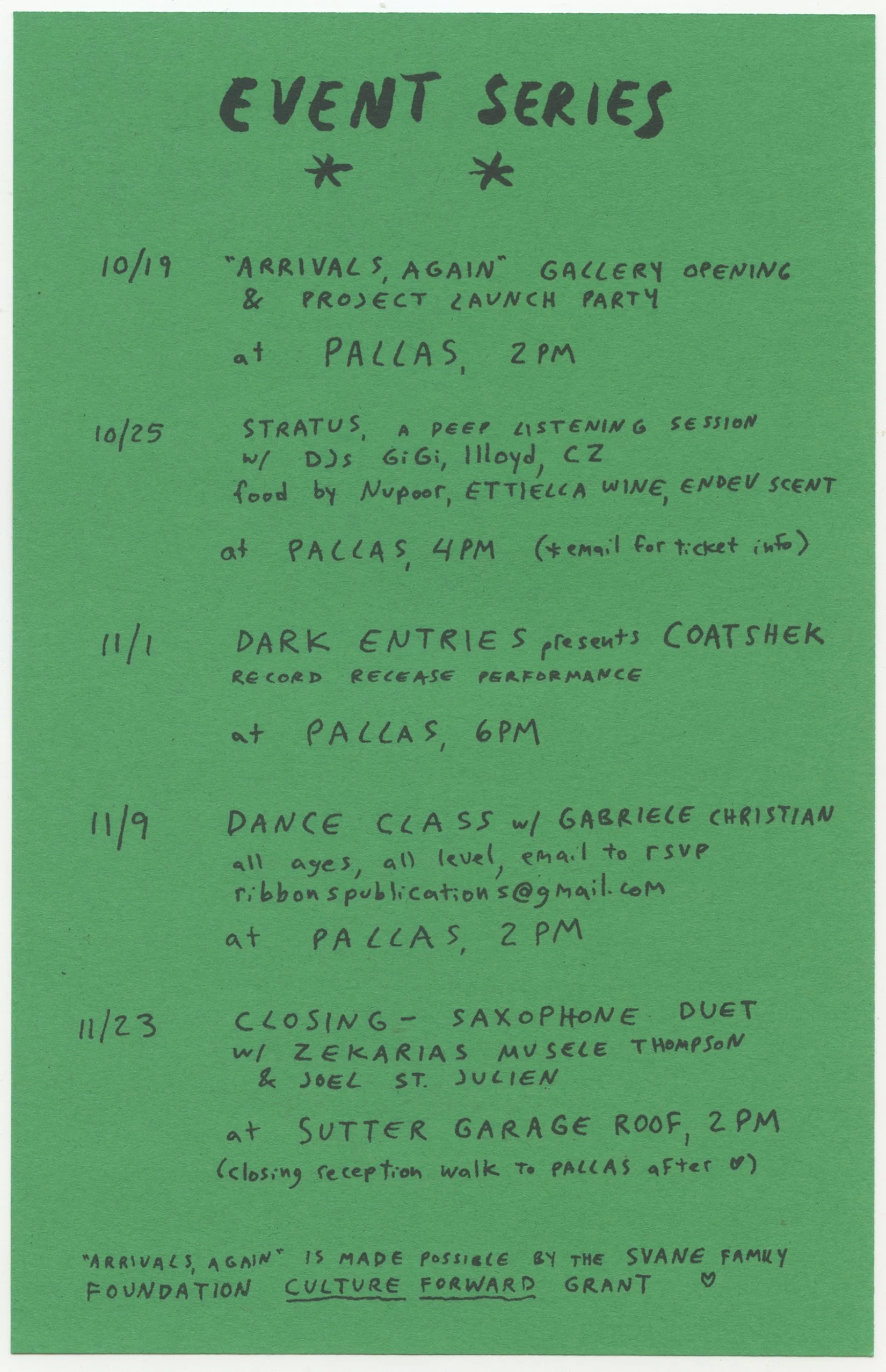
"Arrivals, Again," is made possible by the Svane Family Foundation's Culture Forward Grant.